

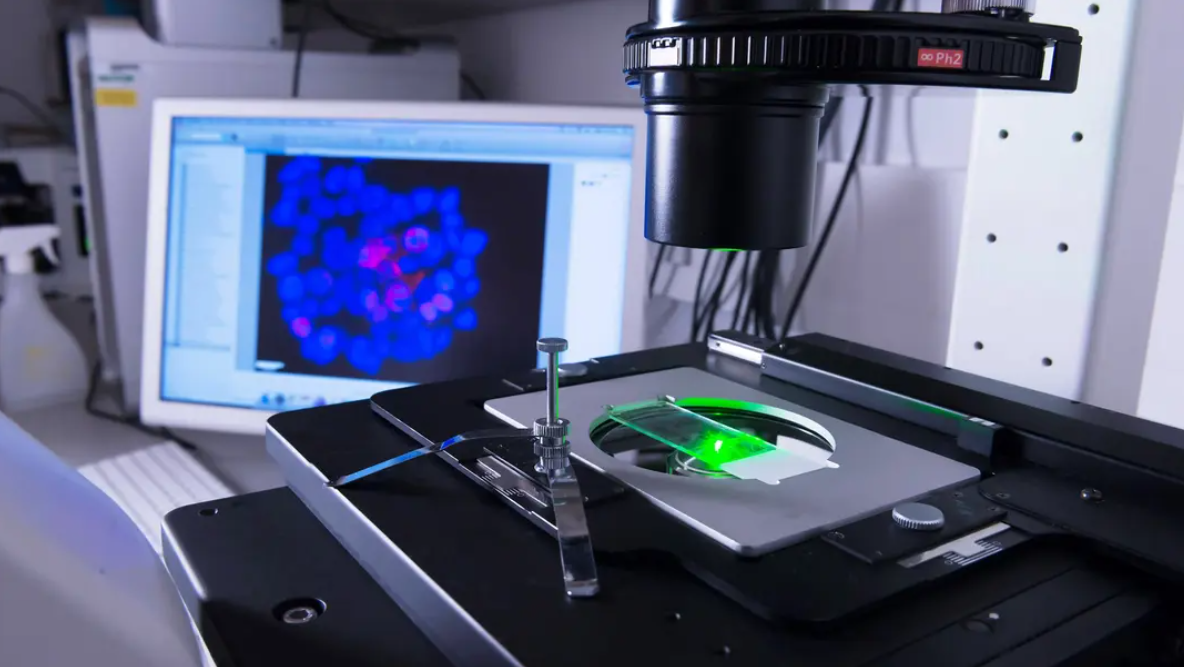
A New Imaging Technology Opens a Window Into the Atomic World
Scientists have long relied on advanced microscopes to understand the tiny structures that control modern technology. From semiconductor chips to next-generation batteries, many breakthroughs depend on observing materials at the atomic scale.
Now, researchers in the United States have introduced a revolutionary scanning transmission electron microscope (STEM) with an energy resolution reportedly up to 200 times better than existing systems.
Installed at the Center for Functional Nanomaterials (CFN) at Brookhaven National Laboratory, the advanced microscope could accelerate discoveries in areas including battery technology, semiconductor manufacturing, quantum computing, and advanced materials engineering.
Why Advanced Microscopy Matters
Many modern technologies depend on controlling materials at extremely small scales.
A battery’s performance, for example, is determined by how atoms move inside electrode materials during charging and discharging.
Similarly, semiconductor chips rely on structures that are measured in nanometers, where even tiny defects can affect performance.
Traditional microscopes provide valuable information, but researchers often need greater precision to understand:
- Atomic structures
- Chemical changes
- Material defects
- Electronic behavior
- Energy transfer processes
The new microscope aims to provide scientists with a much clearer view of these hidden processes.
A Major Leap in Electron Microscopy
The new instrument uses advanced scanning transmission electron microscopy technology.
Unlike traditional optical microscopes that use visible light, electron microscopes use focused beams of electrons to examine materials.
Because electrons have much shorter wavelengths than visible light, they can reveal details far beyond the limits of conventional imaging.
The upgraded system includes a highly specialized filtering technology that improves energy resolution dramatically.
This allows researchers to study not only the shape of materials but also their electronic and chemical properties.
Understanding Materials at the Atomic Level
One of the most important advantages of the new microscope is its ability to analyze materials in unprecedented detail.
Researchers can investigate:
Battery Materials
Scientists can observe how lithium ions move through battery electrodes and identify causes of degradation.
This could help create:
- Longer-lasting batteries
- Faster charging systems
- Safer energy storage technologies
Semiconductor Technology
Modern chips require extremely precise manufacturing.
The microscope could help researchers study:
- Defects in semiconductor structures
- New chip materials
- Advanced transistor designs
- Next-generation computing components
As chip technology continues advancing, understanding materials at the atomic level becomes increasingly important.
Quantum Computing
Quantum computers rely on extremely sensitive materials and structures.
Small imperfections can affect quantum states and reduce performance.
Advanced microscopy could help researchers design more reliable quantum devices.
Exploring New Materials for Future Technology
Many future technologies depend on discovering better materials.
Examples include:
- Solid-state batteries
- Advanced semiconductor materials
- Superconductors
- Carbon-based materials
- Nanotechnology applications
By providing a clearer understanding of how materials behave, advanced microscopes can shorten the development process from laboratory research to real-world applications.
Supporting the Next Generation of Energy Storage
Battery innovation is one of the areas that could benefit significantly from this technology.
As demand grows for:
- Electric vehicles
- Renewable energy storage
- Portable electronics
- Grid-scale batteries
scientists need better tools to understand why batteries lose performance over time.
The new microscope could reveal microscopic changes that were previously impossible to observe, helping researchers design more efficient energy storage solutions.
The Connection Between Materials Science and Future Technology
Many technological breakthroughs begin with understanding materials.
Artificial intelligence hardware, renewable energy systems, electric vehicles, and advanced robotics all depend on improvements in material performance.
The ability to observe materials with greater precision could become a foundation for future innovation.
From better batteries to faster chips, microscopic discoveries could lead to major technological changes.
A New Era of Scientific Discovery
The installation of this advanced electron microscope represents a major step forward in materials research.
As industries continue pushing the limits of computing power, energy storage, and advanced manufacturing, tools capable of revealing atomic-level details will become increasingly valuable.
The future of technology may depend not only on creating new ideas but also on understanding the smallest building blocks that make those ideas possible.
