

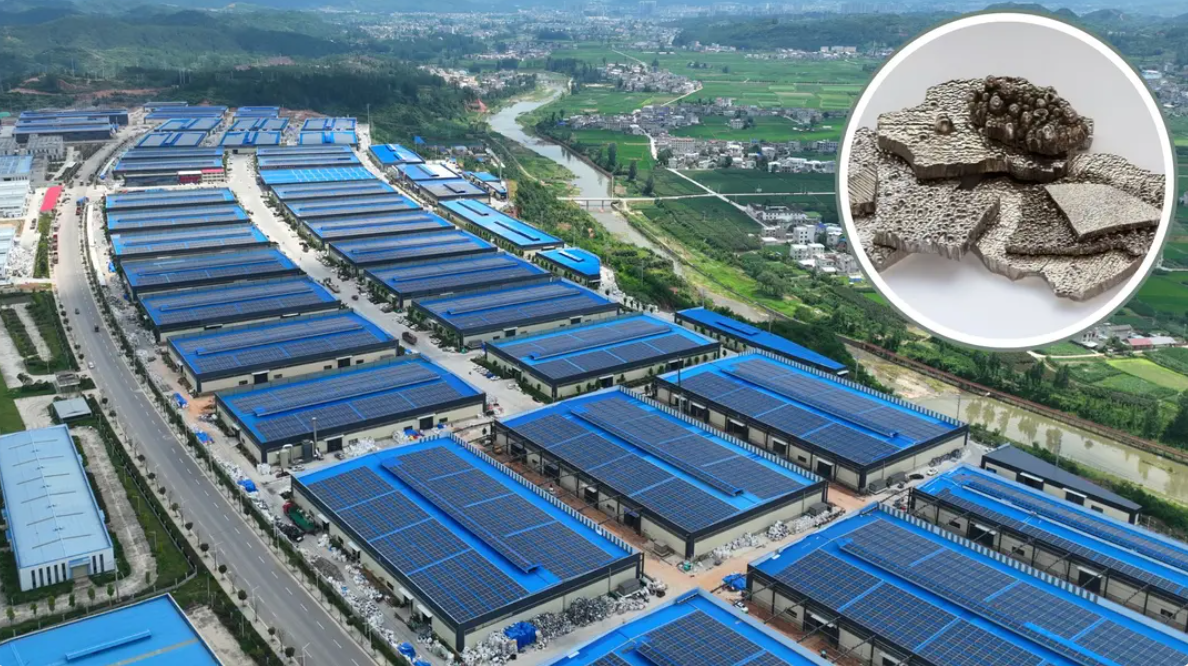
New Facility Could Support Clean Energy Supply Chains With 70% Water Recycling
As demand for electric vehicles, renewable energy storage, and advanced electronics continues to rise, securing critical battery materials has become a major global challenge.
Cobalt is one of the key materials used in many battery technologies, but traditional mining and processing methods often face environmental concerns, including high energy consumption and water usage.
A proposed cobalt processing facility in Arizona aims to address some of these challenges by combining renewable energy, advanced water management, and domestic mineral processing.
The project, developed by EVelution Energy, is designed to become one of the first commercial-scale solar-powered cobalt processing facilities in the United States.
Why Cobalt Matters for Future Technology
Cobalt plays an important role in modern battery manufacturing.
It is commonly used in:
- Electric vehicle batteries
- Energy storage systems
- Portable electronics
- Advanced industrial applications
As global demand for clean energy technologies increases, reliable supplies of critical minerals have become increasingly important.
Countries and companies are investing in new methods to secure materials while reducing environmental impact.
A Solar-Powered Approach to Mineral Processing
Traditional industrial processing facilities require large amounts of energy.
The Arizona cobalt project aims to reduce its environmental footprint by integrating solar power into its operations.
Using renewable energy could help lower:
- Carbon emissions
- Dependence on fossil fuels
- Long-term operating costs
The combination of clean electricity and domestic mineral processing represents a growing trend in sustainable manufacturing.
Solving the Water Challenge
Water availability is one of the biggest challenges for industrial projects in the US Southwest.
Large-scale mineral processing requires water for:
- Cooling systems
- Chemical processing
- Equipment operations
- Material handling
Arizona’s dry climate makes efficient water management especially important.
The project has completed groundwater studies confirming that available underground water resources could support long-term operations.
Targeting 70% Water Recycling
One of the key sustainability goals of the facility is achieving approximately 70% water recycling.
Instead of continuously consuming fresh water, the plant plans to recover and reuse water throughout its operations.
Advanced water management systems could help:
- Reduce freshwater demand
- Improve operational efficiency
- Lower environmental impact
This approach reflects a broader shift toward circular industrial processes.
Building a Domestic Battery Supply Chain
Currently, many critical minerals used in advanced batteries rely heavily on international supply chains.
Developing domestic processing capabilities could help strengthen:
- Electric vehicle manufacturing
- Renewable energy storage
- Semiconductor industries
- Energy security
The Arizona project represents part of a larger effort to create more resilient clean technology supply chains.
The Future of Sustainable Manufacturing
Modern manufacturing is increasingly focused on combining industrial production with environmental responsibility.
Future facilities may integrate:
- Renewable energy
- Water recycling
- Artificial intelligence
- Automated production systems
- Advanced materials processing
This could create a new generation of factories designed to produce essential technologies with fewer environmental impacts.
Challenges Ahead
Despite the progress, several challenges remain before large-scale production begins.
Construction Costs
Building advanced processing facilities requires significant investment.
Technical Complexity
Cobalt processing involves sophisticated chemical and engineering systems.
Environmental Management
Long-term operations must maintain responsible water and resource management.
Market Conditions
Battery material demand and pricing can influence project economics.
A Step Toward Cleaner Battery Production
The Arizona cobalt facility highlights a broader transformation happening across the energy industry.
The future of clean technology depends not only on renewable energy generation but also on creating sustainable supply chains for the materials behind those technologies.
By combining solar power, water recycling, and domestic processing, projects like this could help redefine how critical materials are produced.
The next generation of energy infrastructure may depend on factories that are not only productive but also environmentally responsible.
