

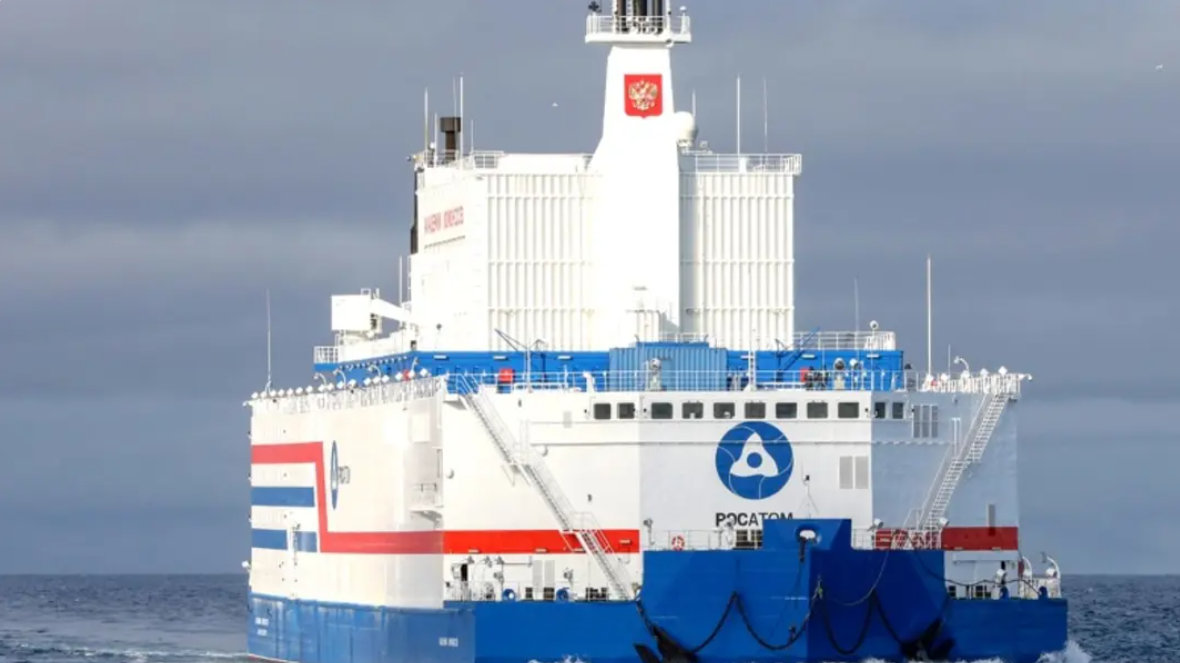
Floating Nuclear Technology Could Redefine Future Energy Infrastructure
As countries search for reliable low-carbon energy solutions, nuclear technology continues to evolve beyond traditional land-based power plants.
A new generation of compact and mobile nuclear systems is opening possibilities for powering remote regions, industrial facilities, and areas with limited energy infrastructure.
Russia’s Akademik Lomonosov, the world’s only operational floating nuclear power plant, has recently completed an international safety review, highlighting the growing interest in advanced nuclear energy systems.
A Nuclear Power Plant at Sea
Unlike conventional nuclear facilities built on land, Akademik Lomonosov operates as a floating power platform.
The facility is located in the Arctic port city of Pevek, Russia, where it provides electricity and heat to remote communities.
Floating nuclear plants are designed to address energy challenges in locations where building traditional power stations may be difficult.
Potential applications include:
- Arctic regions
- Remote islands
- Coastal industrial zones
- Mining operations
- Offshore facilities
International Safety Assessment
A team of specialists from the World Association of Nuclear Operators conducted a two-week safety evaluation of the facility.
The review examined multiple areas, including:
- Daily operations
- Technical documentation
- Safety management systems
- Operational procedures
- Equipment performance
International safety assessments are an important part of maintaining confidence in nuclear technologies, especially as advanced reactor concepts continue developing worldwide.
How Floating Nuclear Plants Work
Floating nuclear power plants use compact reactor systems installed on specially designed platforms.
Instead of constructing a permanent land-based facility, engineers integrate reactor technology into a marine structure that can be transported and deployed where energy is needed.
Advantages may include:
Flexible Deployment
Floating reactors can provide electricity in remote areas without requiring large-scale land infrastructure.
Stable Power Generation
Unlike solar and wind systems, nuclear reactors can generate electricity continuously regardless of weather conditions.
Support for Remote Development
Energy-intensive industries in isolated locations may benefit from reliable power sources.
Why Advanced Nuclear Energy Is Gaining Attention
The global energy transition requires more than renewable generation.
While solar and wind power continue expanding, many regions also need stable electricity sources that can operate continuously.
Advanced nuclear technologies are being explored because they offer:
- High energy density
- Low operational carbon emissions
- Long-term power generation
- Reduced dependence on fossil fuels
Future energy systems may combine:
- Solar power
- Offshore wind
- Nuclear energy
- Battery storage
- Smart grid technology
Potential Future Applications
Floating nuclear technology could eventually support various industries.
Remote Communities
Small populations in isolated regions often face challenges accessing reliable electricity.
Industrial Projects
Mining, manufacturing, and resource extraction operations require large amounts of stable energy.
Offshore Infrastructure
Future ocean-based industries may require independent power sources.
Disaster Recovery
Mobile energy systems could provide temporary electricity after major infrastructure failures.
Engineering Challenges
Despite its potential, floating nuclear technology faces significant challenges.
Safety Requirements
Nuclear systems require strict operational controls and continuous monitoring.
Marine Conditions
Platforms must withstand:
- Extreme weather
- Corrosion
- Long-term ocean exposure
Regulatory Approval
International nuclear standards require extensive evaluation before wider adoption.
Public Acceptance
Building confidence around nuclear safety remains an important factor.
The Future of Mobile Clean Energy
The successful operation and safety evaluation of floating nuclear systems demonstrates a new direction for energy engineering.
Future energy infrastructure may become more flexible, combining traditional large-scale power generation with mobile and modular technologies.
From offshore wind platforms to floating nuclear reactors, engineers are developing new ways to deliver reliable electricity in challenging environments.
As global energy demand continues increasing, advanced nuclear systems could become an important part of the next generation of clean energy solutions.
