

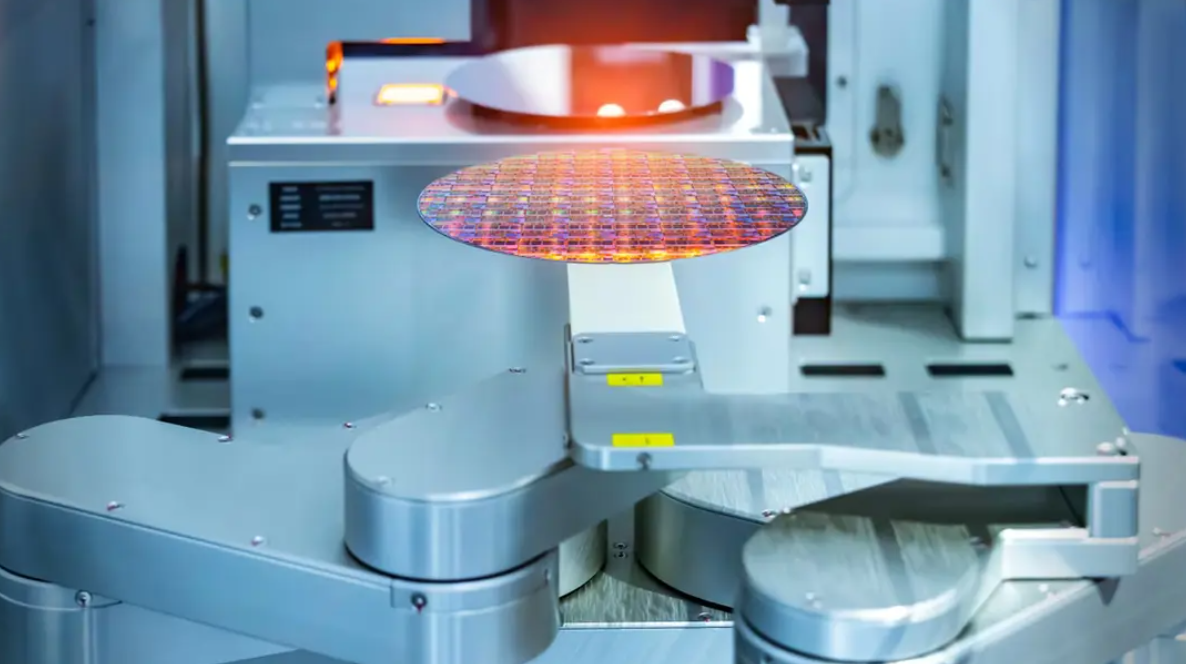
New AI Manufacturing Technology Could Improve Chip Production Efficiency
The semiconductor industry is entering a new era where artificial intelligence is not only powering applications but also transforming the way chips are manufactured.
AMD says a South Korean technology company is using AMD EPYC server processors to detect semiconductor wafer defects in real time without relying on traditional graphics processing units (GPUs).
The technology, developed by startup AiBiz, uses an AI-powered platform called DutchBoy to analyze massive amounts of sensor data collected from semiconductor manufacturing equipment.
By identifying problems during production, the system could help chip manufacturers improve yields, reduce waste, and potentially save millions of dollars annually.
The Growing Challenge of Semiconductor Manufacturing
Modern semiconductor manufacturing is one of the most complex industrial processes in the world.
Advanced chips require thousands of precise manufacturing steps, including:
- Lithography
- Etching
- Deposition
- Inspection
- Packaging
Even tiny defects at the microscopic level can cause entire wafers to fail, resulting in significant financial losses.
As chip designs become smaller and more advanced, detecting defects quickly has become increasingly difficult.
Traditional inspection methods often require extensive analysis after production steps are completed, which can delay problem identification.
AI-powered monitoring aims to solve this challenge by detecting issues as they occur.
How AI Detects Wafer Defects
AiBiz’s DutchBoy platform collects and analyzes sensor data generated by semiconductor fabrication equipment.
During chip production, manufacturing machines continuously produce large amounts of information about:
- Temperature
- Pressure
- Equipment conditions
- Process variations
- Chemical environments
The AI system analyzes these signals in real time to identify unusual patterns that may indicate potential defects.
By detecting problems earlier, manufacturers can adjust production conditions before more wafers are affected.
Why AMD EPYC Processors Are Important
Many AI applications rely heavily on GPUs because of their ability to process large parallel workloads.
However, AiBiz’s system uses AMD EPYC server processors instead.
High-performance CPUs can provide several advantages in industrial environments:
Lower Infrastructure Complexity
Manufacturers may not need specialized GPU-based systems for every AI workload.
Improved Energy Efficiency
CPU-based solutions can potentially reduce power requirements in large-scale industrial operations.
Easier Integration
Many manufacturing environments already rely on CPU-based computing infrastructure.
For semiconductor factories operating around the clock, efficient computing solutions are critical.
Improving Chip Manufacturing Yield
One of the biggest goals of AI-powered inspection is improving semiconductor yield.
Yield refers to the percentage of successfully manufactured chips that meet quality standards.
Even small improvements in yield can create major financial benefits because semiconductor production involves extremely expensive equipment and materials.
According to AMD and AiBiz, the technology could help manufacturers achieve higher yields and reduce production losses, with potential annual savings reaching hundreds of millions of dollars across large-scale operations.
Deployment in Samsung Semiconductor Facilities
The DutchBoy platform has reportedly been deployed at Samsung Electronics semiconductor manufacturing facilities in South Korea and Xi’an, China.
The implementation demonstrates how AI is moving from experimental research into real industrial environments.
Semiconductor companies are increasingly adopting AI for:
- Predictive maintenance
- Quality control
- Process optimization
- Equipment monitoring
The goal is to create smarter and more autonomous semiconductor factories.
The Future of AI-Driven Manufacturing
The semiconductor industry is becoming one of the most important areas for industrial AI innovation.
As demand increases for:
- Artificial intelligence chips
- Data center processors
- Autonomous systems
- Edge computing devices
manufacturers need faster and more reliable production methods.
AI-based defect detection could become a fundamental technology for future smart factories, where machines continuously analyze data and optimize production without human intervention.
The combination of advanced processors, artificial intelligence, and semiconductor engineering may reshape how the world’s most important electronic components are produced.
Why This Matters for Future Technology
The future of computing depends not only on designing better chips but also on manufacturing them more efficiently.
Technologies like AI-powered wafer inspection represent a new generation of industrial innovation, where artificial intelligence helps improve the very hardware that powers modern society.
From smartphones and electric vehicles to robotics and cloud computing, better semiconductor manufacturing will influence nearly every major technology sector.
