

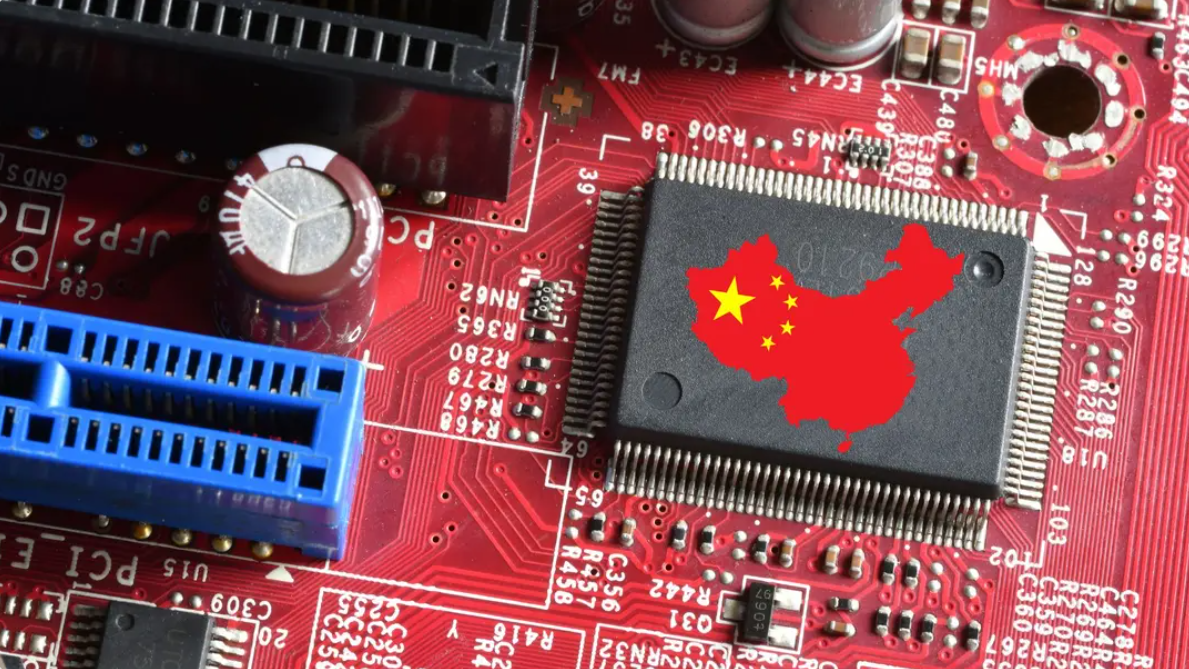
New Lithography Developments Highlight the Race for Semiconductor Independence
The global semiconductor industry is entering a new phase of competition as countries race to secure advanced chip manufacturing capabilities.
China’s reported progress in developing domestic semiconductor equipment has attracted global attention, particularly in the field of deep ultraviolet (DUV) lithography machines, one of the most critical technologies used in chip production.
While analysts say China still faces significant technical challenges and remains behind leading semiconductor equipment manufacturers, growing investment in domestic chipmaking could reshape the global semiconductor landscape.
Why Lithography Technology Matters
Lithography is one of the most important steps in semiconductor manufacturing.
During this process, manufacturers use advanced machines to transfer extremely small circuit patterns onto silicon wafers.
The smaller these patterns become, the more powerful and efficient chips can be.
Modern lithography systems are essential for producing:
- Smartphone processors
- Artificial intelligence chips
- Data center hardware
- Memory chips
- Advanced electronics
Because of the complexity involved, only a small number of companies worldwide have developed advanced lithography technology.
China’s Push for Domestic Semiconductor Equipment
Reports indicate that a state-backed company in Shanghai has been developing domestic immersion DUV lithography systems.
According to industry reports, several systems are expected to be produced in the coming years, with early machines potentially being deployed by major Chinese semiconductor manufacturers, including:
- Semiconductor Manufacturing International Corporation (SMIC)
- Hua Hong Semiconductor
- ChangXin Memory Technologies (CXMT)
The development represents part of China’s broader strategy to reduce reliance on foreign semiconductor equipment.
DUV vs EUV: Understanding the Technology Gap
The semiconductor industry relies on different generations of lithography technology.
DUV (Deep Ultraviolet Lithography)
DUV systems use shorter-wavelength ultraviolet light to create smaller circuit patterns.
They remain widely used in many semiconductor manufacturing processes.
EUV (Extreme Ultraviolet Lithography)
EUV technology represents the most advanced generation of lithography.
It enables manufacturers to produce cutting-edge chips with extremely small transistor structures.
Currently, Dutch company ASML remains the only company producing commercial EUV lithography machines.
These systems are among the most advanced industrial machines ever created, involving complex optics, precision engineering, and advanced materials.
ASML’s Technological Advantage
Although China’s domestic chip equipment development has gained attention, analysts say ASML continues to maintain a substantial technological advantage.
Advanced lithography systems require expertise across multiple fields:
- Optical engineering
- Precision manufacturing
- Materials science
- Software control systems
- Semiconductor physics
Building competitive equipment requires not only individual components but also decades of accumulated industrial experience.
How US Export Restrictions Are Changing the Semiconductor Industry
The semiconductor competition is also being influenced by international technology policies.
The United States has introduced restrictions on the export of certain advanced semiconductor technologies to China, aiming to limit access to the most advanced chip manufacturing capabilities.
However, some analysts argue that these restrictions may have an unintended consequence: accelerating China’s efforts to develop its own semiconductor ecosystem.
Instead of slowing technological development, restrictions may encourage:
- Increased domestic investment
- Local equipment development
- Alternative supply chains
- Semiconductor research programs
The Rise of Semiconductor Self-Sufficiency
Countries around the world are increasingly focusing on semiconductor independence.
The COVID-era chip shortage demonstrated how vulnerable global supply chains can be.
Semiconductors are now considered strategic technologies because they support:
- Artificial intelligence
- Electric vehicles
- Robotics
- Defense systems
- Telecommunications
- Consumer electronics
As a result, governments are investing billions of dollars into semiconductor research and manufacturing.
The Future of Global Chip Competition
The semiconductor industry is becoming a competition not only between companies but also between entire technology ecosystems.
Future progress will depend on advances in:
- Lithography
- Advanced packaging
- Chip design
- Materials science
- Manufacturing automation
- Artificial intelligence
While companies such as ASML currently hold major advantages in semiconductor equipment, increasing global investment could accelerate innovation across the industry.
The race for next-generation chips is likely to remain one of the most important technology battles shaping the future economy.
Why This Matters for Future Technology
Semiconductors are the foundation of modern technology.
Every major innovation — from AI systems and autonomous vehicles to robotics and smart devices — depends on increasingly powerful chips.
The development of domestic chip manufacturing capabilities could influence the future of global technology, supply chains, and industrial competition for decades to come.
