

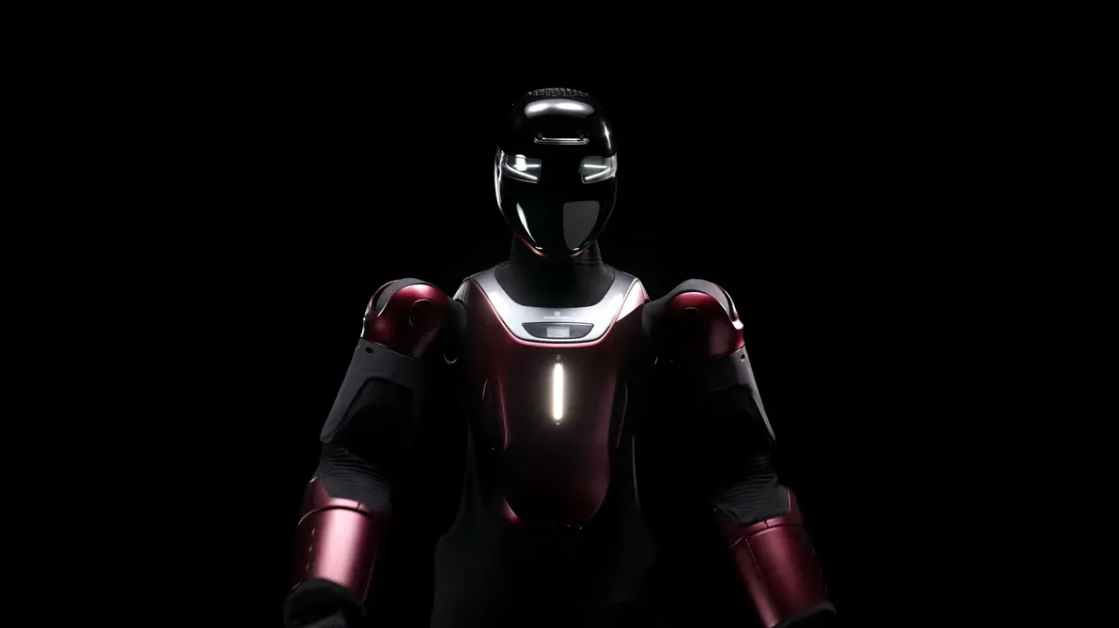
A new generation of humanoid robots is bringing artificial intelligence from the digital world into the physical world.
Humanoid robots are moving closer to becoming practical tools for real-world environments. Italian robotics company Generative Bionics recently introduced GENE.01, a humanoid robot platform designed to combine advanced artificial intelligence with human-like physical interaction.
In just six months, the team transformed GENE.01 from a concept into a functional humanoid robot capable of walking, sensing, and interacting with its surroundings.
Unlike traditional robots that rely on limited sensors, GENE.01 features a full-body multimodal skin system that can detect touch, proximity, force, and temperature. These capabilities represent an important step toward safer and more natural collaboration between humans and machines.
Building More Flexible Robot Intelligence
Modern robotics is moving beyond simple automation toward machines that can understand and adapt to complex environments.
Generative Bionics’ latest AI system, GEN-1, focuses on teaching robots how to work with different types of tools and robotic hands.
Instead of training intelligence for only one robotic arm, the system learns from multiple physical interfaces, including five-finger robotic hands and specialized tools. This approach allows robots to develop broader physical understanding and transfer skills between different tasks.
The goal is to create robots that can grasp, move, and interact with objects in ways closer to human abilities.
Low-Cost Manufacturing Opens New Possibilities
Robotics innovation is not limited to humanoid machines.
Researchers are also exploring affordable manufacturing methods for autonomous systems. One example is a flat-packable flying wing aircraft built primarily from corrugated cardboard.
The lightweight aircraft can be manufactured from laser-cut sheets and assembled in less than 15 minutes without permanent fasteners.
This type of design could support future applications in:
- Rapid deployment
- Low-cost logistics
- Emergency response
- Field operations
AI and Robotics Are Becoming More Connected
The next generation of robots will rely heavily on artificial intelligence models that allow machines to learn from experience.
Companies are now combining:
- Computer vision
- Simulation environments
- Reinforcement learning
- AI foundation models
to create robots that can adapt faster to new situations.
For example, some researchers are using simulated environments and digital replicas of real locations to train robots before deploying them in the physical world.
This approach reduces development time and helps robots become more reliable.
From Factories to Everyday Life
Humanoid robots are gradually expanding beyond industrial environments.
Recent demonstrations show robots performing tasks such as:
- Object recognition
- Household assistance
- Food preparation
- Logistics support
- Human interaction
While many applications remain experimental, the progress suggests that robots may eventually become common assistants in homes, workplaces, and public spaces.
The Future of Physical AI
The development of GENE.01 highlights a major shift in artificial intelligence: AI is no longer limited to screens and software.
The future of AI will increasingly involve machines that can see, move, touch, and interact with the real world.
Humanoid robots are still facing challenges in areas such as cost, reliability, and safety. However, advances in robotics hardware and AI technology are accelerating progress toward a future where intelligent machines work alongside humans.
