

A Breakthrough That Could Redefine Drone Flight Time
Drones have transformed industries ranging from photography and agriculture to logistics and emergency response. However, despite rapid advances in autonomous navigation and artificial intelligence, one major limitation continues to restrict their potential: battery life.
Most drones can only remain airborne for a limited period before needing to land and recharge. This limitation affects everything from commercial delivery operations to long-duration inspections in remote areas.
Now, researchers in China are developing a futuristic solution that could dramatically extend drone endurance: wireless laser-powered charging while the aircraft is still flying.
The technology could allow drones to receive continuous energy from laser beams projected from the ground, creating new possibilities for longer and more autonomous aerial operations.
How Laser Charging Technology Works
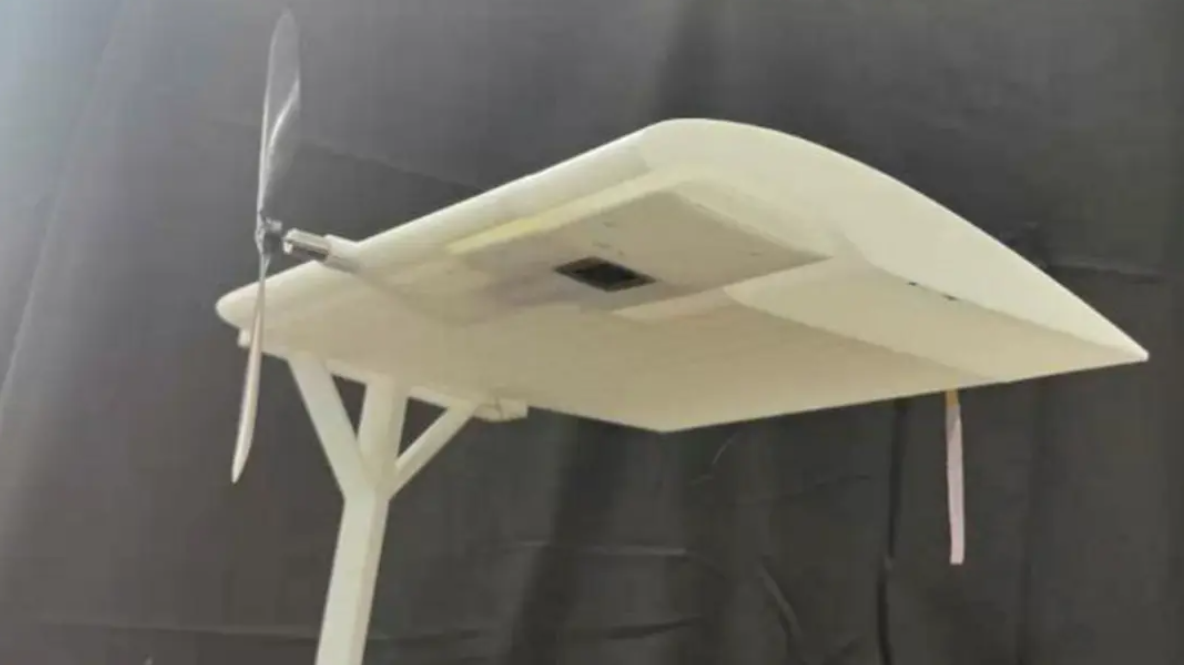
The research team from the Civil Aviation University of China developed a lightweight energy receiver designed to be installed beneath a drone’s wing.
Instead of relying on sunlight like traditional solar panels, the device captures energy from a concentrated laser beam and converts it into usable electrical power.
The core technology is a perovskite laser cell-thermoelectric (PLC-TE) tandem device.
Unlike conventional photovoltaic cells that absorb broad-spectrum sunlight, this system is optimized for high-energy laser transmission. When the laser reaches the receiver, the energy conversion process produces electricity that can directly support the drone’s power system.
This approach creates a potential pathway toward continuous-flight drones without requiring traditional battery replacement or landing stations.
Why Drone Battery Life Remains a Major Challenge
Battery technology has improved significantly in recent years, but energy storage remains one of the biggest barriers for unmanned aerial vehicles.
Modern lithium-ion batteries provide reliable power but still have limitations:
- Limited flight duration
- Heavy battery weight
- Long charging times
- Reduced performance in extreme environments
For many professional applications, these limitations create operational challenges.
For example:
- Search and rescue drones may need to operate for hours during emergencies.
- Agricultural drones need longer coverage time across large fields.
- Inspection drones must monitor pipelines, bridges, and power networks over extended periods.
- Delivery drones require consistent flight capability.
A reliable mid-air charging solution could completely change how these systems are designed.
Engineering Challenge: Managing Laser Heat
High-powered laser energy brings another major engineering challenge: heat management.
When powerful laser beams are converted into electricity, part of the energy is released as heat. Excessive temperatures could reduce efficiency or damage sensitive electronic components.
To solve this issue, researchers designed cooling channels integrated into the receiver structure.
The system uses airflow created by the drone’s own propellers to help remove heat during flight.
This combination of:
- Advanced materials
- Thermal management
- Energy conversion technology
- Aerospace engineering
allows the receiver to remain lightweight while maintaining stable operation.
Potential Applications of Laser-Powered Drones
If successfully developed, laser charging technology could expand drone capabilities across multiple industries.
Emergency Response
Search and rescue teams could deploy drones capable of staying airborne for much longer periods, improving disaster monitoring and locating missing people.
Smart Agriculture
Farmers could use long-duration drones to monitor crops, analyze plant health, and collect environmental data over large areas.
Infrastructure Monitoring
Drones could continuously inspect:
- Bridges
- Railways
- Power lines
- Communication towers
reducing the need for dangerous manual inspections.
Autonomous Delivery Networks
Longer flight times could support future delivery systems where drones operate continuously with minimal human intervention.
The Role of Advanced Materials in Future Aviation
One of the most important aspects of this research is the use of perovskite materials.
Perovskites have attracted significant attention in renewable energy and electronics because they offer:
- High energy conversion efficiency
- Lightweight properties
- Flexible manufacturing possibilities
Researchers are exploring how these materials could contribute not only to solar technology but also to future aerospace systems.
The development of lightweight, efficient energy receivers could become an important component of next-generation autonomous machines.
Could Laser Charging Enable Unlimited Drone Flight?
While laser-powered charging represents an exciting advancement, the technology is still facing several challenges before widespread adoption.
Future development must address:
- Long-distance laser transmission efficiency
- Weather interference
- Safety regulations
- Energy costs
- Precise beam tracking
A practical system would require advanced artificial intelligence and tracking technology to maintain a stable connection between the ground station and moving drones.
However, continued improvements in robotics, AI navigation, and energy systems could gradually make this vision possible.
The Future of Autonomous Flight
The combination of robotics, artificial intelligence, and advanced energy technology is pushing drones toward a new era.
Laser-powered charging is not simply a new way to extend battery life. It represents a shift toward a future where autonomous machines can operate continuously with minimal human involvement.
From smart cities to industrial automation, the ability to keep drones powered in the air could become a key technology supporting the next generation of intelligent systems.
As research continues, laser energy transfer may become an important building block for the future of aviation and robotics.
